
A brief introduction to the most advanced approach to biohacking.
Aging is not a single event. It is a slow accumulation of oxidative damage, chronic low-grade inflammation, declining cellular efficiency, and the gradual erosion of the body’s ability to repair itself. Most people don’t notice it until they do, and by then, the process has been underway for years.
This is why anti-aging medicine has shifted in recent decades. Rather than chasing symptoms, researchers and clinicians are increasingly focused on the underlying biological mechanisms that drive aging itself. And increasingly, ozone-based therapies — including EBOO — are entering that conversation.
This article takes an honest look at what EBOO therapy may offer in the context of longevity: what the science suggests, what remains speculative, and why a growing number of functional medicine practitioners are incorporating it into long-term wellness protocols.
What Actually Drives Aging at the Cellular Level?
To understand why EBOO is relevant to longevity, it helps to understand what aging actually looks like at the biological level.
Three processes are particularly central:
Oxidative stress. Every cell in your body produces reactive oxygen species (ROS) as a byproduct of normal metabolism. In a healthy, well-functioning system, antioxidant defenses neutralize these molecules before they cause damage. As we age, that balance tips — more oxidative stress, less antioxidant capacity. The result is progressive damage to proteins, lipids, and DNA.
Chronic inflammation. Sometimes called “inflammaging,” this refers to the low-grade, persistent inflammatory state that accumulates with age. It’s not the acute inflammation you feel after an injury — it’s quieter, slower, and far more damaging over time. It underlies virtually every major age-related disease, from cardiovascular decline to neurodegeneration.
Mitochondrial dysfunction. Mitochondria are the energy factories of every cell. As they age and accumulate damage, they become less efficient and more prone to producing harmful byproducts. Cells with dysfunctional mitochondria age faster and die sooner.
These three processes are deeply interconnected. They reinforce each other, and they are all, to varying degrees, addressable through the same mechanism that makes EBOO therapy interesting: controlled oxidative preconditioning.
What Is EBOO Therapy, and How Does It Fit In?
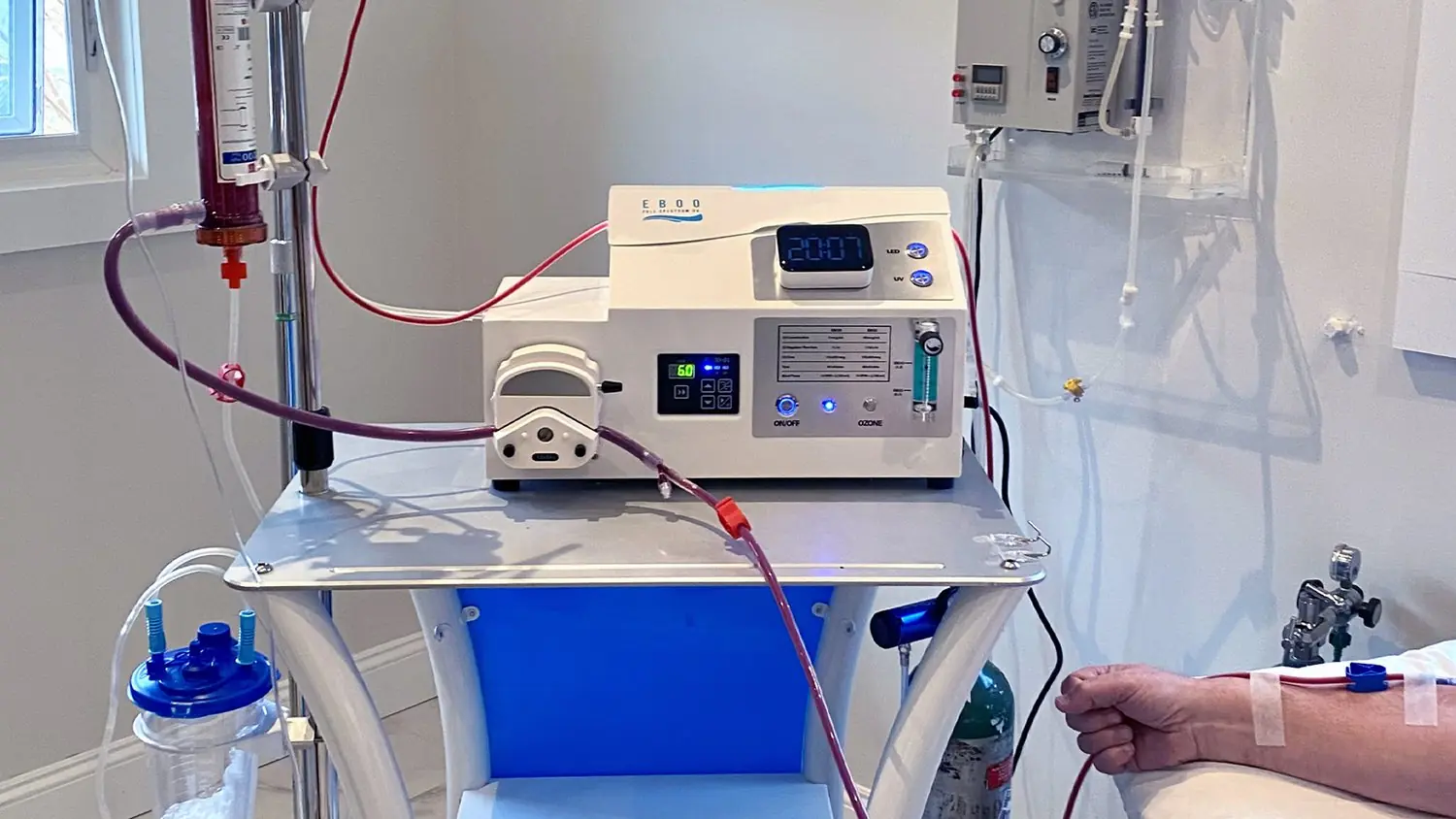
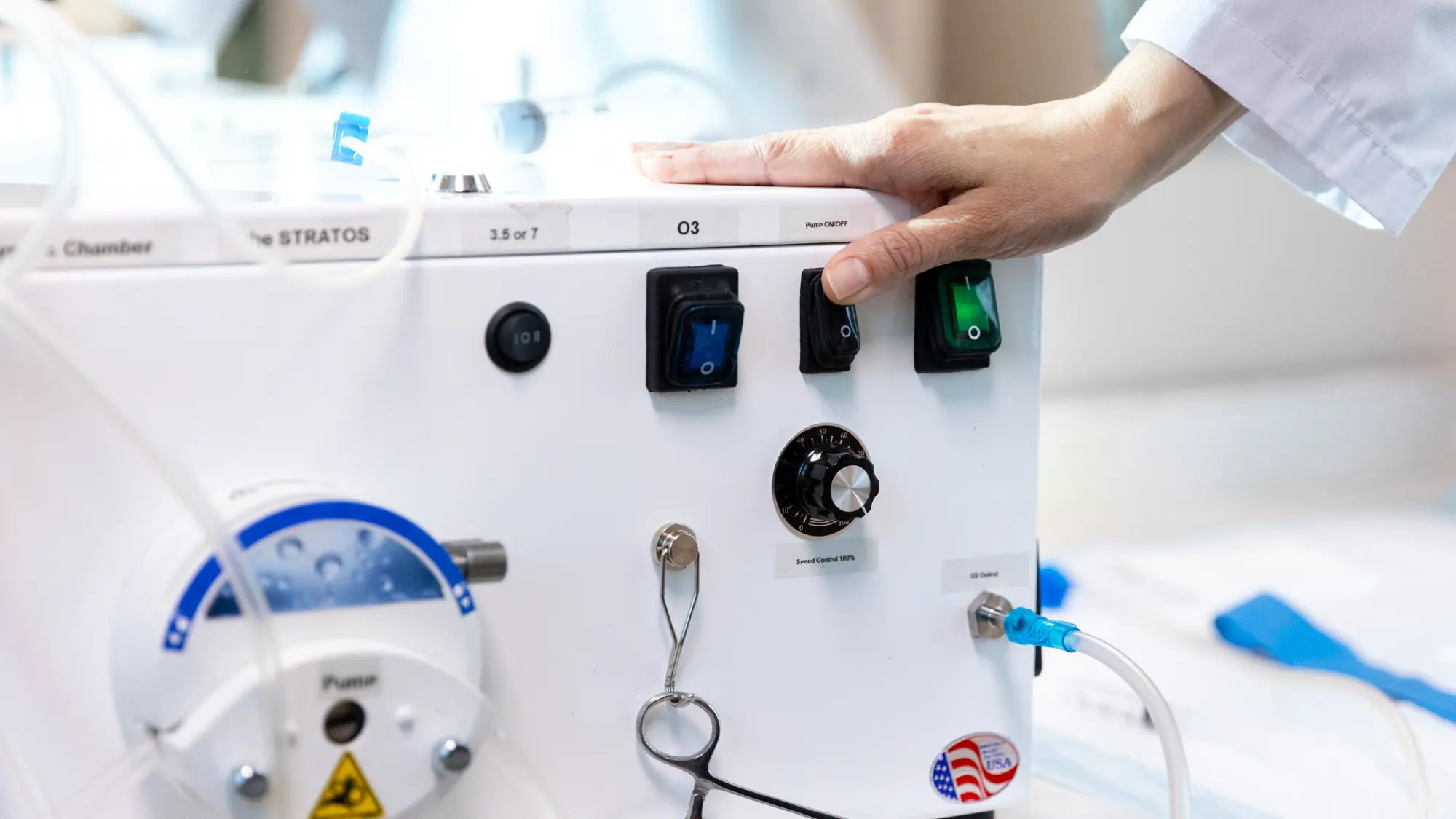
EBOO (Extracorporeal Blood Ozone and Oxygenation) is a form of ozone therapy in which blood is drawn from the body, filtered, infused with ozone and oxygen, and returned continuously through a closed circuit. A typical session processes several liters of blood over the course of 45 to 60 minutes.
The ozone in this process doesn’t simply oxidize things indiscriminately. At the controlled concentrations used therapeutically, ozone acts as a mild oxidative signal — one that activates the body’s own antioxidant and anti-inflammatory pathways rather than overwhelming them. This concept, known as hormesis, is well-established in biology: small, controlled stressors trigger adaptive responses that leave the system more resilient than before.
In the context of anti-aging, this matters for several reasons.
How EBOO May Support Longevity
1. Upregulating Antioxidant Defenses
One of the most consistent findings in ozone therapy research is its ability to stimulate the production of endogenous antioxidants — particularly superoxide dismutase (SOD), catalase, and glutathione. These are the body’s own frontline defenses against oxidative damage.
Rather than simply supplying antioxidants from the outside (as a supplement would), ozone therapy appears to activate the internal machinery that produces them. For longevity purposes, this is significant: it’s the difference between giving the body fish and helping the body fish better.
2. Modulating Inflammation
Chronic inflammation accelerates virtually every marker of biological aging. EBOO therapy has been associated — in clinical observation and in emerging research — with reductions in pro-inflammatory cytokines and improvements in immune regulation.
This anti-inflammatory effect is not immediate, and it’s not permanent after a single session. But as part of a structured protocol, it may contribute meaningfully to reducing the inflammatory burden that accumulates over time.
3. Improving Oxygen Utilization
Aging tissues become progressively less efficient at using oxygen. EBOO enhances oxygen delivery and utilization at the cellular level — improving what’s sometimes referred to as tissue oxygen tension. Better oxygenation means more efficient mitochondrial function, which means healthier, more resilient cells.
Some patients report improvements in energy, cognitive clarity, and physical recovery that are consistent with this mechanism, though individual responses vary considerably.
4. Supporting Detoxification
The liver and kidneys — the body’s primary detoxification organs — become less efficient with age. Accumulated toxins, heavy metals, and metabolic byproducts contribute to the overall burden on the system. EBOO’s filtration component helps reduce this load, giving the body’s natural detox pathways less to manage.
What the Research Does — and Doesn’t — Say
It would be intellectually dishonest to present EBOO as a proven anti-aging intervention without acknowledging the limits of the current evidence base.
Large-scale, randomized controlled trials specifically studying EBOO for longevity do not yet exist. Much of what is known comes from studies on ozone therapy more broadly, from clinical observations, and from the mechanistic plausibility of the pathways described above.
What we can say with reasonable confidence is this: the biological mechanisms through which EBOO operates — oxidative preconditioning, antioxidant upregulation, anti-inflammatory modulation, improved oxygenation — are directly relevant to the processes that drive aging. Whether regular EBOO sessions translate into measurable longevity outcomes over the long term is a question the research is still catching up to.
That gap between mechanism and long-term outcome is worth being honest about. EBOO is not a fountain of youth, and any practitioner or clinic claiming otherwise is overstating the evidence. What it may be is one well-reasoned tool in a broader longevity strategy.
For more in-depth information about medical papers supporting EBOO Treatment from a scientific standpoint, please visit our Research section.
Who Is Using EBOO for Longevity Purposes?
In practice, EBOO therapy for anti-aging tends to attract a specific type of patient: health-conscious adults in their 40s, 50s, and 60s who are already engaged with preventive medicine, who are not necessarily sick, but who are proactive about optimizing how they age.
These are often people who are already working with a functional medicine or integrative physician, already paying attention to nutrition, sleep, and metabolic health — and who see EBOO as one more evidence-informed layer in a comprehensive approach.
Practitioners who incorporate EBOO into longevity protocols typically recommend it as a series of sessions — not a one-time event — and often as part of a broader program that addresses diet, hormones, sleep, and other lifestyle variables. EBOO is most sensibly understood as a complement to these foundations, not a replacement for them.
Find out which celebrities are already improving their overall well-being with EBOO Therapy; visit our EBOO in the Press section.
Practical Considerations
If you’re considering EBOO therapy from a longevity standpoint, a few things are worth keeping in mind:
It’s a protocol, not a single session. The benefits associated with ozone therapy are cumulative. Most practitioners recommend an initial series of sessions, followed by periodic maintenance depending on individual response and goals.
It works best as part of a broader strategy. EBOO is not a substitute for sleep, a poor diet, or unmanaged chronic stress. It’s most effective when those foundations are reasonably in order.
Not everyone is a candidate. Certain conditions — including some clotting disorders, glucose-6-phosphate dehydrogenase (G6PD) deficiency, and hyperthyroidism — may be contraindications. A thorough consultation with a qualified practitioner is essential before beginning any ozone therapy protocol.
Results vary. Individual response depends on baseline health, lifestyle, frequency of treatment, and a range of other factors. Honest expectations are important.
A Closing Thought
The desire to age well — to remain sharp, energetic, and physically capable for as long as possible — is not vanity. It’s a rational response to what we now know about the biology of aging and its consequences.
EBOO therapy won’t stop time. But for those approaching their health with seriousness and intention, it represents a genuinely interesting option — one grounded in sound biological reasoning, increasingly supported by clinical experience, and worthy of an honest conversation with a qualified practitioner.
If you’d like to find a clinic near you offering EBOO therapy, you can search our global directory here.
This article is for informational purposes only and does not constitute medical advice. Always consult a qualified healthcare provider before beginning any new treatment protocol.